Shopify Web Design UK

Shopify web design built for growth

Bespoke Shopify web design and development for UK brands that want more from their online store. We combine premium design, conversion-focused UX and custom Shopify development to create fast, flexible stores built to sell.

Shopify websites designed to convert

We design Shopify stores around how your customers actually shop. From clear calls to action and intuitive navigation to product pages, mobile UX, trust signals and site speed, every part of the journey is considered with conversion in mind.

Certified Shopify Select Partner Since 2017

Your next chapter

The right start for your Shopify store

Launching, refreshing or moving to Shopify? Explore what we can take care of, then let’s shape a project around your business.

Launch

New store setup

For a new business ready to launch. 

A conversion focused Shopify store, built around your brand for your customers.

From £2,000*

Your project will be priced according to the requirements.

What’s included

  • Theme selection and brand styling
  • Homepage, product and collection layouts
  • Menus, filters and store search
  • Product catalogue setup
  • Payment and shipping configuration
  • SEO and analytics foundations
  • Testing, launch and store handover
Plan my new store
Refresh & grow

Shopify redesign

For an existing store ready for its next chapter. 

Improve the design, simplify shopping and make more of Shopify.

From £1,500*

Your project will be priced according to the requirements.

What’s included

  • Review of your current store and UX
  • Refreshed design around your brand
  • Improved mobile shopping experience
  • Stronger product and collection pages
  • Navigation and app setup review
  • SEO review and redirects where needed
  • Testing and a planned relaunch
Discuss my redesign
Make the move

Shopify migration

For businesses moving to Shopify. 

A carefully planned move, with your content, customers and search visibility in mind.

From £2,500*

Your project will be priced according to the requirements.

What’s included

  • Platform and migration planning
  • Product and collection data transfer
  • Agreed customer and order data import
  • Store design and theme customisation
  • URL mapping and redirect setup
  • Integration and data accuracy checks
  • Launch planning and handover
Plan my migration

Let’s talk about your project

We’ll use these details to respond to your enquiry. Privacy policy

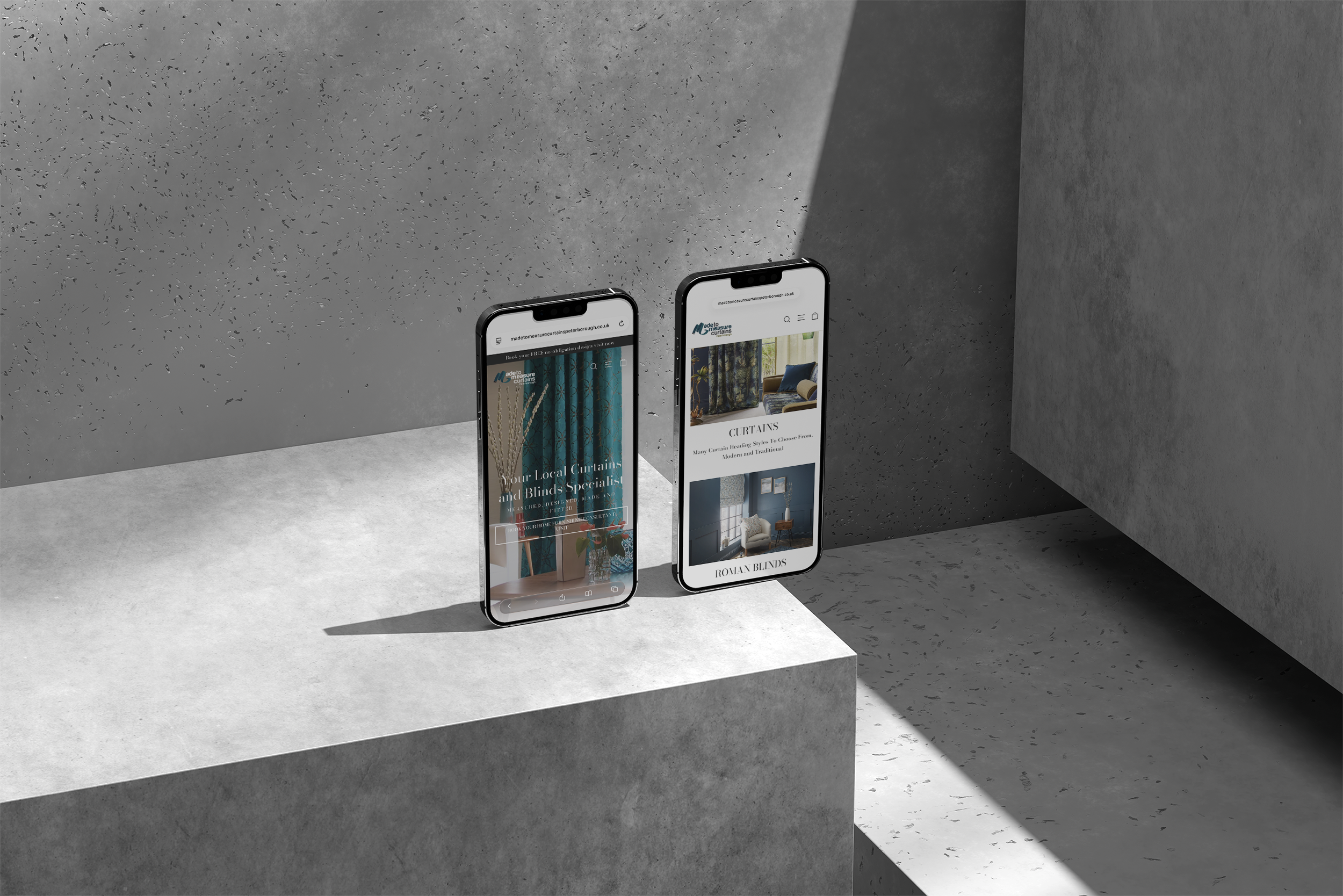
Shopify Web Design Example

What does our Shopify web design service include?

Every Shopify website we build starts with a solid, well-supported premium theme. This gives us a reliable foundation with much of the core Shopify functionality already built and tested, rather than spending your budget recreating things that already work perfectly well.

Building every part of a Shopify store completely from scratch takes considerably more development time, which ultimately means a higher cost for you. In most cases, we don't think that's a good use of your budget.

Instead, we start with the right theme and put our time into the areas that will actually make a difference to your store. We customise the design around your brand and build any additional sections or functionality you need.

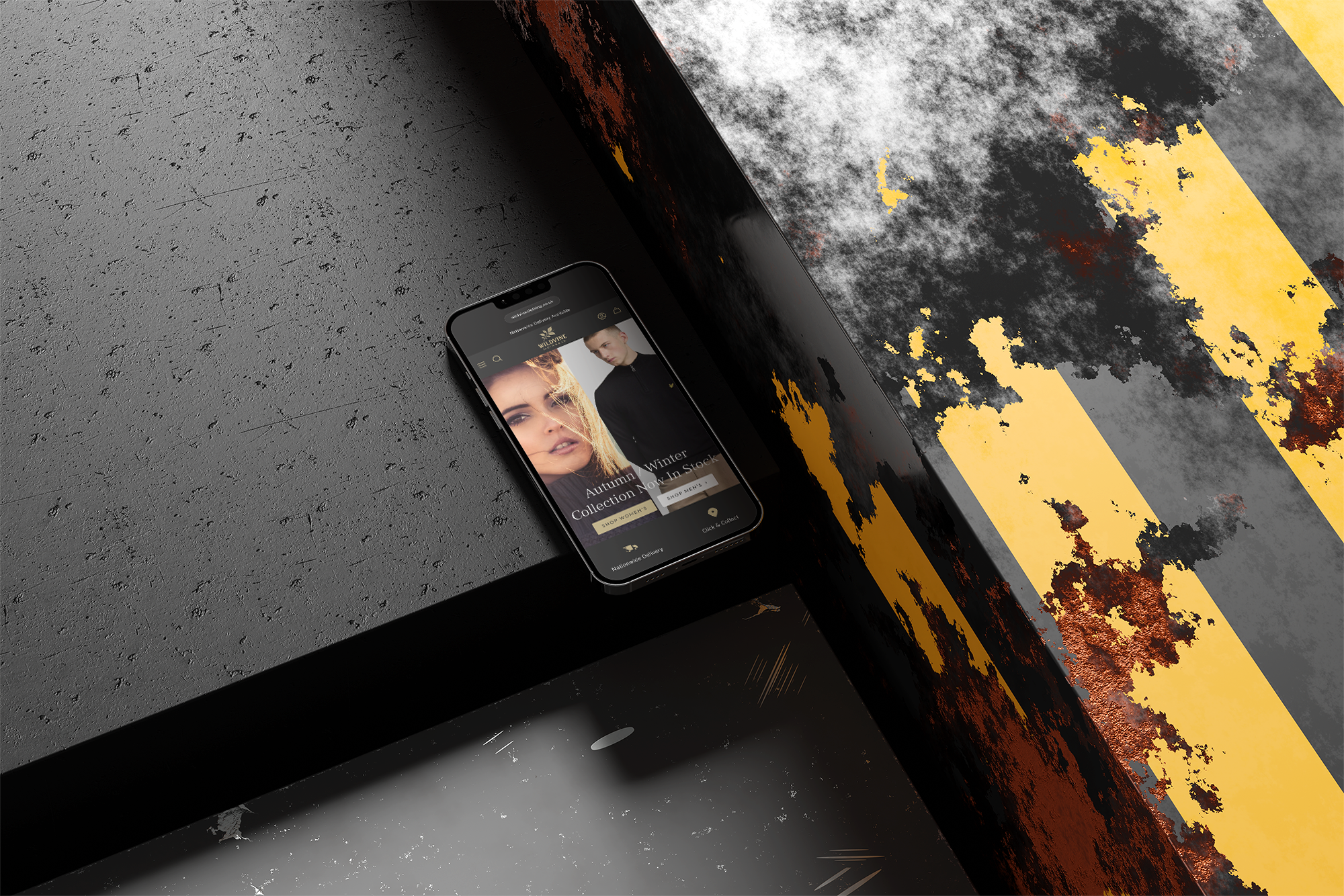
Shopify web design for clothing brand

Reducing Development costs

Using a Shopify theme as a foundation means we can get your website designed, developed and launched much faster. We're not spending weeks rebuilding basics such as product galleries, navigation, filters, carts and other standard Shopify features before we can even start on the parts that make your store different.

The theme is simply the foundation. By the time we've finished designing and developing the site, it can look and feel completely different from the original theme.

You get the best of both approaches: a Shopify store that looks bespoke and does what your business needs, while keeping the reliability, maintainability and lower development cost of a professionally built theme.

Our Process

Our Shopify Web Design Process

There's quite a lot that goes into a Shopify build that you'll never see in a design mockup. Here's what we take care of.

Discovery and planning

Before we start designing anything, we need to understand your business. We'll look at what you sell, who your customers are, how people currently use your website and where things could be improved. We'll also talk about any frustrations you have with your existing site and what you'd like the new one to do better.


From there, we can plan the structure of the site, navigation, collections and key pages. This stage is more important than it might sound. Quite often, what looks like a design problem is actually a problem with how the website or product catalogue has been organised.

Choosing the right Shopify theme

There are plenty of Shopify themes available, but they're definitely not all equal. Some look great in a demo but aren't particularly flexible. Others come packed with features you'll never use or become difficult to maintain once they've been heavily customised.


We'll recommend a premium theme that's well built, regularly updated and suitable for your type of business and product range. We then use that as the foundation for the website rather than simply installing a theme and changing the colours.

A design that fits your brand

We'll design the main areas of the website around your brand, including the homepage, collections, product pages and important content pages. That includes things like typography, colours, imagery, spacing and the overall style of the site.


We also pay particular attention to mobile. For most Shopify stores, a large proportion of customers are shopping on their phones, so we don't treat mobile as an afterthought or simply squeeze the desktop design onto a smaller screen.

Custom Shopify sections

This is usually where we take the website beyond what the original theme can do. If you need something that isn't available in the theme, we'll build it. That might be a comparison table, size guide, product specifications, ingredient information, lookbook, bundle section, review block, trust section or something completely specific to your business.


Where possible, we build these directly into Shopify using Liquid rather than relying on another app. We also make them editable through Shopify's theme editor, so you'll be able to change the content, swap images, adjust settings and reuse sections without having to edit any code.

Product pages

We put a lot of thought into product pages because this is where customers ultimately decide whether to buy. We'll look at how variants are selected, how images are displayed, where pricing and delivery information sits and what questions a customer is likely to have before adding something to their basket.


For stores with more detailed product information, we can also use Shopify metafields and metaobjects. For example, rather than manually adding dimensions, materials, specifications or care instructions into every product description, we can create structured fields that keep everything consistent across the website.

Collections, navigation and search

An easily navigable website can mean the difference between a customer finding what they want and leaving the site to go to a competitor. Customers shouldn't have to work hard to find a product. We'll organise collections, menus, filters and search so that people can quickly narrow down what they're looking for.


This can include Shopify Search & Discovery filters, sorting options, product types, tags and a navigation structure that can grow with the business. It's better for customers, but it also gives search engines a much clearer understanding of the website.

Shopify Web Design Example

Technical SEO for Shopify

SEO isn't something we bolt onto the website at the end of the project. It's considered throughout the build.

This is particularly important when redesigning or migrating an existing website because seemingly small changes can have a big impact on rankings if they're handled incorrectly.

As part of the build we'll take care of things such as:

  • 301 redirects – if URLs change, we'll redirect the old pages to the most relevant new ones rather than leaving customers and Google hitting 404 pages.
  • Site structure – products, collections and content are organised logically so they're easy for customers and search engines to navigate.
  • Duplicate content – Shopify can sometimes make the same product accessible through several URLs. We'll make sure canonical URLs are handled correctly.
  • Titles and headings – important pages will have sensible page titles, meta descriptions and a properly structured heading hierarchy.
  • Structured data – we'll make sure appropriate schema is in place for things such as products, your business, breadcrumbs and FAQs where relevant.
  • Images – images are correctly sized and optimised, with appropriate alt text.
  • Internal links – we'll make sure important products, collections and pages aren't buried away where neither customers nor Google can easily find them.
  • Indexing – we'll check that Google can access the pages you want indexed while keeping things such as internal search results out of the index where appropriate.

This is one area where we'd much rather get things right before launch than try to repair the damage afterwards.

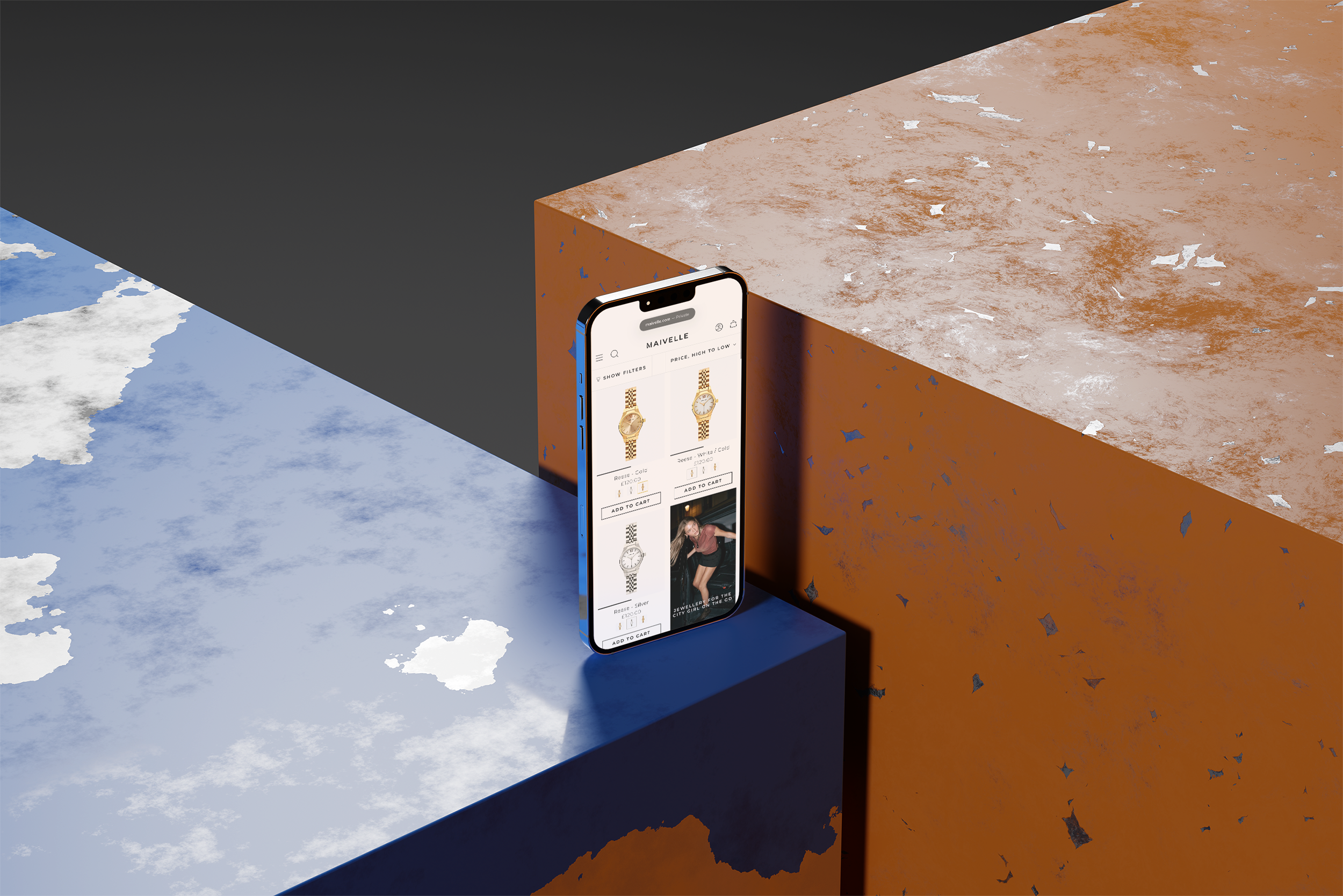
Shopify web design for jewellery brand

Speed and Core Web Vitals

Nobody likes waiting for a website to load, particularly on a phone.

We try to keep everything we build as lean as possible and avoid adding scripts, libraries and apps unless they're actually needed.

We'll optimise things such as images and fonts, look for unnecessary code and keep an eye on layout shifts and other Core Web Vitals issues.

The important thing for us isn't chasing a perfect score for the sake of it. It's making sure the website feels fast when a real customer uses it.

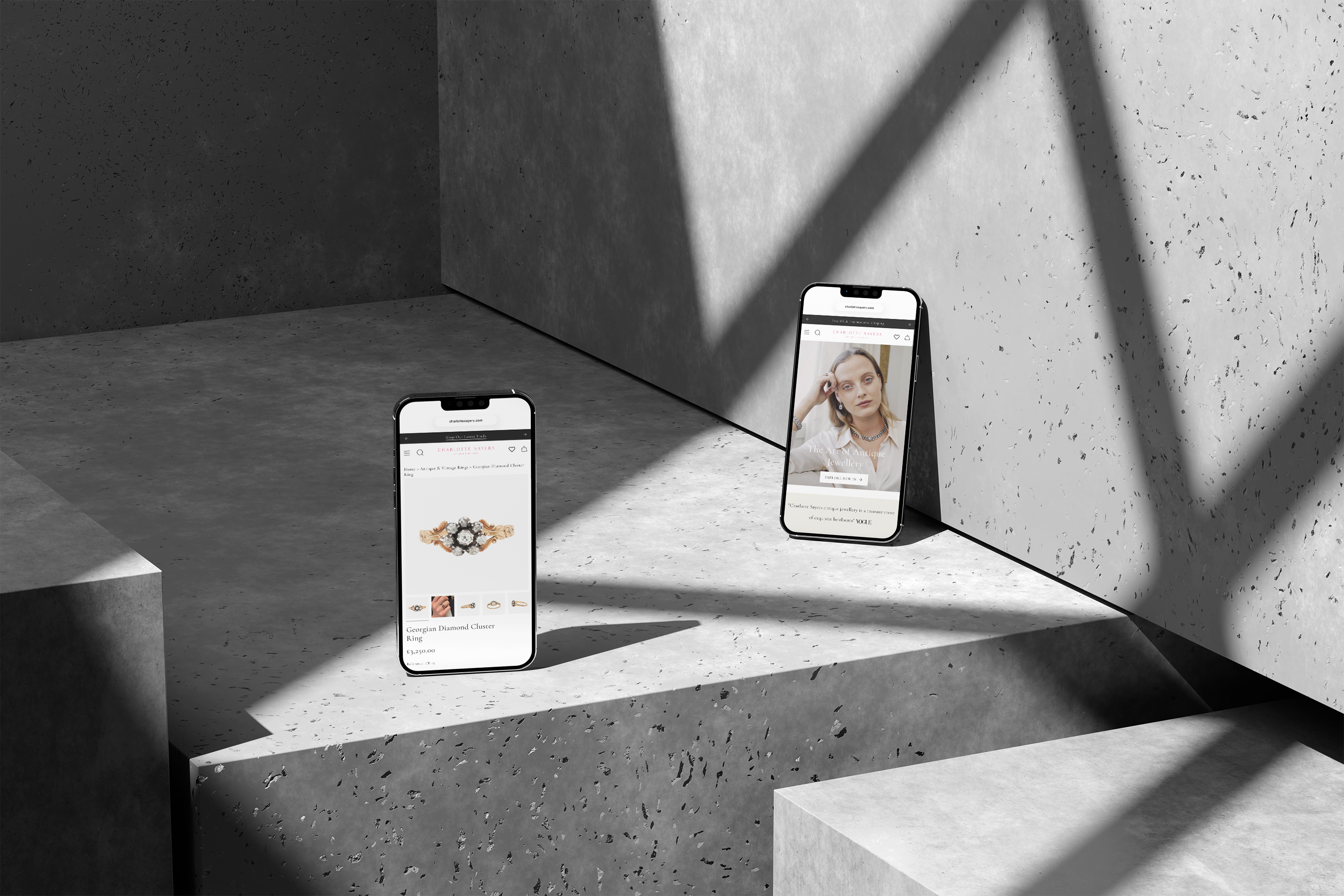
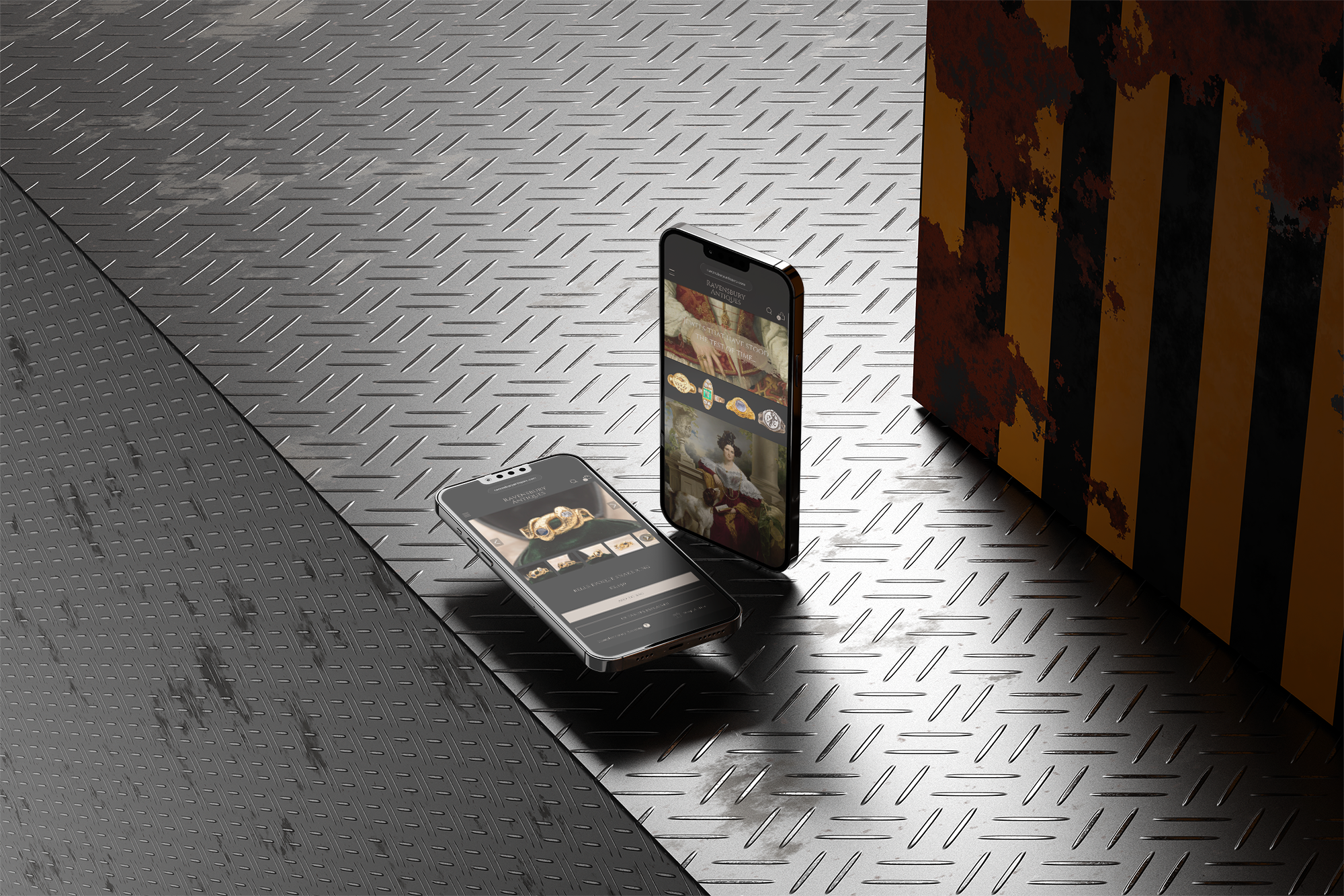
Shopify web design for antique jewellery store

Website Accessibility for Shopify

A website should be usable by as many people as possible, including customers with disabilities.

For example, someone who is blind or has limited vision may use a screen reader to navigate your store, so images need useful alt text and pages need to be structured in a way the software can understand. Customers with colour vision deficiencies need enough contrast to distinguish text and buttons, while someone who can't use a mouse may rely entirely on a keyboard to move around the website.

Accessibility can also help people with dyslexia, reduced vision, hearing difficulties and motor impairments, as well as older customers who may simply find small text, low contrast or complicated navigation difficult to use.

We take these things into account when designing and building your store, with readable text, sensible colour contrast, keyboard navigation, clear focus states, meaningful alt text and properly structured content.

It's not just about ticking an accessibility box. If part of your website is difficult or impossible for someone to use, you're potentially excluding that person from becoming a customer. And in many cases, the things that make a website more accessible also make it easier for everyone else to use.

Shopify web design for jewellery brand

What is Conversion Rate Optimisation (CRO)

Conversion rate optimisation (CRO) is considered throughout the design. It's not about adding as many sales messages, pop-ups and countdown timers as possible. It's about making it easier for customers to understand what you're selling, trust the business and take the next step.

That starts with having a clear visual hierarchy. On a product page, for example, the product title, price, options and main Add to Cart button should be easy to find without the customer having to hunt for them. On mobile in particular, we'll consider whether important actions need to remain visible as someone moves further down the page.

We'll also look at the information customers need around that main call to action. Delivery times, returns information, payment options, reviews and other trust signals can all help answer the questions that might otherwise stop someone buying.

Product options and variants need to be simple too. If somebody has to work out the difference between several confusing dropdowns before they can add something to their basket, that's unnecessary friction. We'll look at whether options are better presented as buttons, swatches, images or selectors depending on what you're selling.

Valise Luggage - Shopify Website by Fat Buddha Web Design

Designed to convert

The same thinking applies throughout the rest of the store. We'll consider things such as:

  • making primary CTA buttons obvious and placing them where customers naturally need to take the next step
  • keeping the most important product information close to the buying area
  • using reviews, ratings and other trust signals at the points where customers may need reassurance
  • making delivery costs and timescales clear rather than surprising customers later in the checkout
  • keeping navigation, collection filters and search straightforward so people can find products quickly
  • reducing unnecessary steps between discovering a product and buying it
  • making product variants and options easy to understand and select
  • using clear product photography and galleries that work properly on mobile
  • making important information easy to scan rather than hiding everything inside large blocks of text
  • using related products, bundles and recommendations where they're genuinely useful rather than simply trying to push more products
  • keeping the cart simple and making the route to checkout obvious
  • avoiding unnecessary distractions around the main buying journey
  • designing mobile interactions around thumbs and smaller screens rather than simply shrinking the desktop version

How we approach CRO

We also think about the questions a customer is likely to ask at each stage of the journey. Will this fit? When will it arrive? Can I return it? Is this company trustworthy? Which option do I need?

If the website can answer those questions at the right moment, there's less reason for somebody to hesitate or leave.

Ultimately, good CRO is about reducing friction. We want to make the journey from landing on your website to finding the right product, adding it to the basket and checking out feel as straightforward as possible.

Frequently Asked Questions

Shopify Web Design FAQs

Shopify web design for antique jewellery store

✓ Premium Shopify theme customisation and design

✓ Setup of menu navigation and advanced filter system

✓ Upload and configure product data

✓ Setup metafields for additional product data

✓ Setup customer accounts and guest checkout

✓ Setup of Google Shopping feed

✓ Setup of Google Ads account and Google My Business profile

✓ Connect Google Analytics and submission of sitemap to Google Search Console

✓ SEO optimisation of all pages and ALT tags on all images

✓ Setup Shopify Email Marketing

✓ Contact page with reCaptcha security to reduce spam

✓ Install and set up any required apps

✓ Setup of Payments including Shopify Payments with Apple Pay, Shop Pay, Google Pay, Paypal, Klarna

✓ Setup of live product search

✓ Setup shipping charges

✓ Setup GDPR functionality and cookie policy pop up

✓ Setup of emails including order confirmation, order shipped and abandoned checkout

✓ Setup You May Also Like / Product recommendations

Our Shopify web design service typically costs between £2,00 and £6,000 depending on the complexity of the project, custom features, and design requirements.

Most Shopify web design projects depend on the size of the catalogue, the level of custom design required and whether content, photography and product data are ready. After an initial review, we can give you a realistic project plan and launch timeline.

Yes. We can design and build custom Shopify sections and templates so your store is not restricted by a standard theme layout. This is useful when your products, brand story or buying journey needs a more tailored experience.

Yes. All Shopify websites we build include SEO best practices, and we also offer dedicated Shopify SEO services and audits.

Yes. SEO should be planned before a redesign goes live. We can review URLs, metadata, redirects, collection structure, internal links, structured data and Search Console data so the new site launches with a stronger technical foundation.

Yes. We regularly redesign existing Shopify stores to improve performance, usability, conversions, and SEO.

Yes. We provide ongoing Shopify support, maintenance, and development through monthly support packages.

Yes, we also provide Shopify migration services for brands moving from WooCommerce, Etsy, eBay or other ecommerce platforms.

Shopify Website Example

Start your Project

Ready to Start Your Project

If you are moving from another platform, see our Shopify migration service.

If you already have a Shopify store and need more visibility, explore our Shopify SEO services.

For custom sections, theme fixes and performance improvements, see our Shopify developer service.